

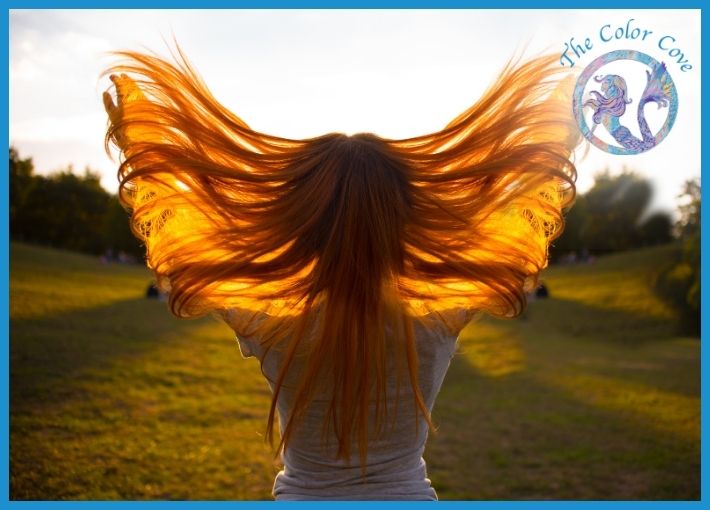
There’s a moment in almost every consultation where a client pulls out her phone, scrolls to a saved photo, and says, “I don’t know what this is called, but I want my hair to do… this.”
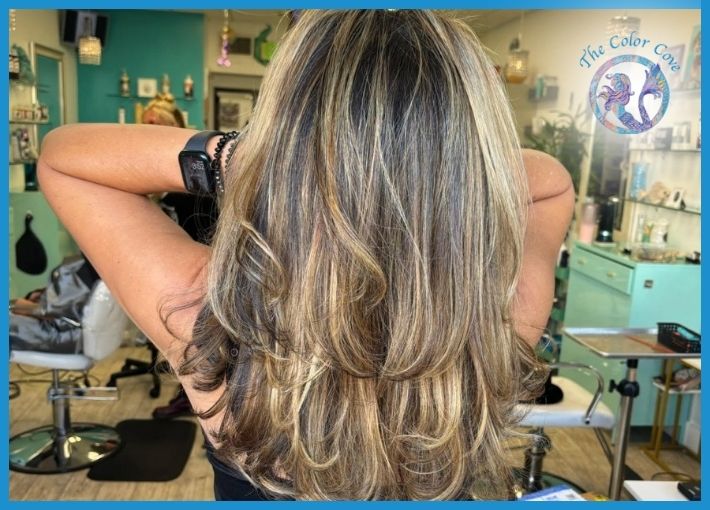
Nine times out of ten, “this” is dimension. Not a single flat shade, not chunky highlights — but hair that looks expensive because the color has depth. Brighter pieces framing the face, softer ones woven underneath, a base that melts into the ends with no visible line anywhere. Hair that moves and catches light differently from every angle.
The good news: “this” is very achievable. It just goes by a handful of names that get thrown around interchangeably — balayage, glossing, babylights, color melting — and knowing the difference helps you ask for exactly what you want. So let’s decode the techniques behind every “I don’t know what it’s called, but…” photo.
Balayage: the foundation of lived-in color
Balayage is a technique, not a color. The word means “to sweep” in French, and that’s literally what happens: lightener is hand-painted onto the surface of selected sections, heavier toward the ends and feathered up toward the root. No foils sealing every strand, no stripes, no harsh regrowth line.
The result reads as natural because it mimics what the sun does to hair over years — brighter where light would hit, deeper underneath. It’s why balayage grows out so gracefully. There’s no obvious “line” at week eight demanding a touch-up; the color just softens.
Who it’s for: anyone who wants brightness with low upkeep, and especially clients transitioning away from heavy all-over highlights. It works on blondes, brunettes, and redheads alike — dimension isn’t a blonde-only concept, and honestly, some of the most stunning dimensional work walks out of our chairs on deep brunettes.
Babylights and foilyage: when you want more light
Sometimes hand-painting alone can’t get you where you want to go, particularly on darker bases or when you’re craving serious brightness up near the root.
Babylights are ultra-fine highlights, woven in tiny sections so the result looks like the hair you had at seven years old — delicately sunlit, never stripey. They’re beautiful around the face and hairline.
Foilyage combines the painted, sweeping placement of balayage with the power of foils, which trap heat and let the lightener lift further. Translation: the soft, blended look of balayage with noticeably more brightness, even on dark brunettes.
A skilled colorist often mixes these in one appointment — babylights at the money pieces, foilyage through the mids, hand-painted balayage on the ends. That layered approach is exactly where “dimensional color” comes from.
The gloss: the step that makes color look expensive
If there’s one service clients underestimate, it’s the gloss. A gloss (or toner) is a sheer, low-commitment layer of color applied after lightening — or on its own between bigger appointments. It does three jobs at once:
- Perfects the tone. This is where brassiness gets neutralized, where blonde becomes buttery or beige, where brunette gets that glassy espresso richness.
- Adds shine. Gloss smooths the cuticle, so hair reflects light like a mirror instead of scattering it.
- Blurs and blends. A gloss can melt highlights into the base so everything reads as one rich, dimensional color instead of separate pieces.
Here’s the insider tip: a standalone gloss appointment every six to eight weeks is the cheapest way to make your color look freshly done. Clients constantly credit it as the reason coworkers ask, “did you do something to your hair?”
“Dimension is the difference between color that sits on the hair and color that lives in it. When we layer techniques — a little painting, a few fine foils, the right gloss — that’s when people can’t stop touching their hair on the way out.” — Jill, Owner, The Color Cove *(quote drafted for client approval)*
Color melting and root shadowing: the finishing touches
Two more terms from your saved photos, decoded:
Color melting is the art of blending two or three shades so the transition is invisible — deep at the root, luminous at the ends, with no detectable start or stop. It’s what makes dimensional color look like one gorgeous, complicated color rather than layers of separate ones.
Root shadow (or root smudge) deepens the root area on purpose, usually a shade close to your natural color. It sounds counterintuitive — you paid to be lighter, why darken the root? — but it’s what creates that effortless, grown-in-perfectly look, and it buys you months between major appointments.
Together, these are why modern color can be both richer and lower maintenance than the highlights of a decade ago.
Keeping dimensional color rich between visits
Dimensional color is an investment, and how it looks in week six comes down to home care. The short list we give every client: a sulfate-free color-safe shampoo, washing fewer times per week, heat protectant every single time an iron touches your hair, and a weekly bond-repair or deep conditioning treatment. We stock the professional lines we trust at the salon, matched to your specific color.
And if you’re the type who keeps up with regular glosses and maintenance appointments, ask us about the membership — it’s built for exactly that rhythm.
Frequently Asked Questions
What’s the difference between balayage and highlights?
Traditional highlights are woven in foils from root to ends, creating uniform brightness with a defined regrowth line. Balayage is hand-painted onto the surface of the hair, concentrated toward the ends, which gives a softer, more natural gradient and a much more graceful grow-out.
What is a hair gloss and how long does it last?
A gloss is a sheer layer of color that refines tone, adds intense shine, and blends dimensional color together. It typically lasts four to eight weeks depending on how often you wash. It’s a quick, affordable appointment that keeps color looking freshly done.
Does dimensional color work on dark hair?
Absolutely. Techniques like foilyage and fine babylights are designed to build believable brightness into brunette hair, and a rich gloss adds the glassy depth dark shades are famous for. Dimension is about contrast and light, not about being blonde.
How often do you need touch-ups with balayage?
Most balayage clients come in every three to four months for the full service, often with a quick gloss visit in between. Because the color is painted with a soft gradient, regrowth blends in instead of announcing itself.
Bring us the photo
You don’t need to know the terminology — that’s our job. Bring the photo, sit down for a consultation, and we’ll map out exactly which combination of techniques gets your hair doing “this.”
**Book your appointment at The Color Cove or call 754.200.5218**.
Follow The Color Cove on Instagram @thecolorcove to see our latest color transformations.

 754 200 5218


